Ethereum explained: smart contracts, gas and staking
How Ethereum differs from Bitcoin, why gas fees exist and spike, what proof of stake changed, and where the real risks sit.
In short
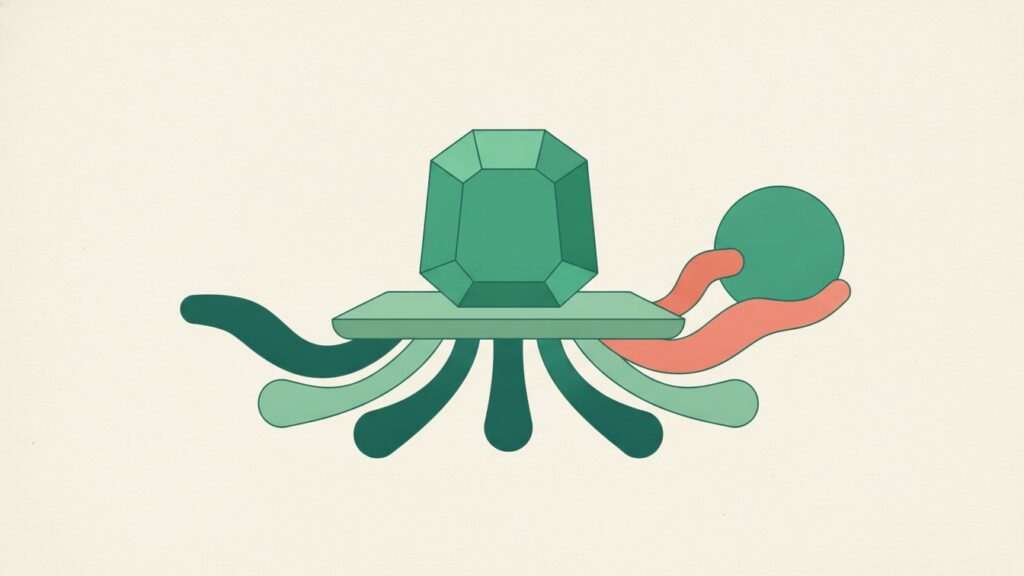
Ethereum is a blockchain built to run programs rather than only move money. That generality is why most crypto applications live on it, and also why most large crypto losses have been smart contract exploits.
If Bitcoin is a ledger for money, Ethereum is a computer that many machines run together. That difference explains almost everything else about it.
Programs on a blockchain
Ethereum runs smart contracts — code deployed to the network that anyone can call and that executes identically on every node. A contract can hold funds, enforce rules and interact with other contracts.
This generality is why the overwhelming majority of crypto applications, from lending protocols to NFT marketplaces, live on Ethereum or on chains that copy its design. It is a platform rather than a product.
Why gas exists
Running code consumes resources, and gas prices that consumption. A simple transfer uses little; a complex contract interaction uses much more. Your fee is roughly gas used × gas price.
Because block space is limited and demand varies, the price is effectively an auction. When the network is busy, users bid higher to be included sooner and fees can rise sharply within minutes. Two consequences catch newcomers out: a small transaction can cost more in fees than it is worth, and a failed transaction still costs gas, because the network performed the work before the failure.
What proof of stake changed
Ethereum moved from mining to proof of stake in 2022. Validators now lock up ETH as collateral instead of burning electricity, and misbehaviour destroys part of that stake.
The headline effect was energy: consumption fell by more than 99%. What it did not do is make fees cheap — fees are a function of block space demand, not of how the chain reaches consensus. That distinction is frequently muddled.
The open criticism is that influence now follows existing holdings, which may concentrate control among large holders and staking services over time.
Where the risk actually is
Ethereum’s base layer has run since 2015 without its ledger being forged. Almost every large loss in its ecosystem has been a smart contract exploit — ordinary software bugs, except that anyone can trigger them and the losses are irreversible.
Being audited reduces that risk without settling it; plenty of audited contracts have been drained. If you intend to use applications rather than just hold ETH, read how to check a smart contract before you interact first.
Layer twos
Most activity is migrating to layer-two networks that batch transactions and settle to Ethereum, which is how fees come down without changing the base layer. They introduce their own trade-offs around who can censor or halt them, and those trade-offs differ substantially between designs — worth understanding before assuming they are all equivalent.
Sources
Not financial advice
This article is educational and general in nature. Crypto is volatile and high-risk, and you can lose the whole of any amount you put in. Nothing here is a recommendation to buy, sell or hold any asset. Always do your own research and consider speaking to a qualified, regulated adviser in your country.
Keep reading
Cryptocurrencies
Bitcoin explained: what it is for, and what it is not
What Bitcoin actually does, why it deliberately does less than newer chains, and an honest look at the arguments on both sides.
Cryptocurrencies
How to assess an altcoin before you buy it
A practical checklist for evaluating any token — supply, team, product, value accrual and on-chain reality — that eliminates most of them…

Cryptocurrencies
Stablecoins explained: three mechanisms, and how each has failed
How fully reserved, over-collateralised and algorithmic stablecoins each hold their peg — and what has actually happened when each came under stress.
Join the discussion
Comments are open to members. An account is free and takes an email address and a password — nothing else.
Join free Sign in