How to assess an altcoin before you buy it
A practical checklist for evaluating any token — supply, team, product, value accrual and on-chain reality — that eliminates most of them in minutes.
In short
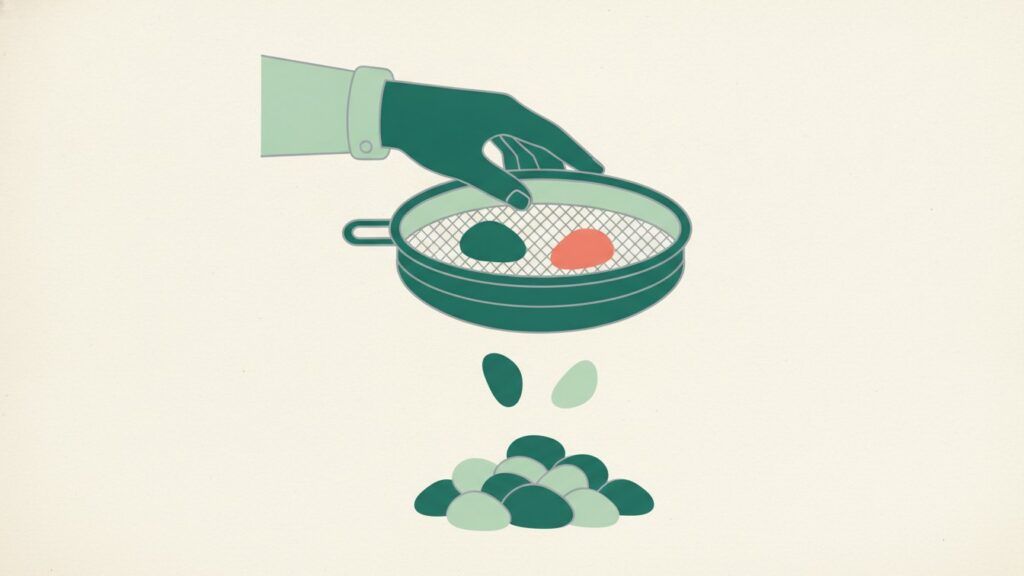
Most tokens fail a small number of basic questions about supply distribution, working product and whether the token captures any value. Applying that checklist honestly discards the large majority very quickly.
There are tens of thousands of altcoins and the great majority are worthless. The useful skill is not picking winners; it is discarding obvious losers cheaply, which a short checklist does surprisingly well.
1. Who holds the supply?
Open a block explorer and look at the holder distribution. If a handful of wallets control most of the supply, they can sell into whatever liquidity exists and leave everyone else with a collapsed price. This is the single most predictive check available and takes about a minute.
Watch for supply split across many wallets funded from the same source at the same time — that is one party, not many. And identify which large holders are exchange or locked contracts rather than individuals.
2. What is the unlock schedule?
Compare circulating supply against total supply. If most tokens are locked, find the vesting calendar. Those unlocks are dated sell pressure, and they routinely coincide with sharp falls. A token that looks reasonable on circulating supply can look very different fully diluted.
3. Is there a product, or only a roadmap?
Does the thing exist and do people use it? Not “is there a testnet” or “is it coming in Q3” — is there something working now, with users who are not being paid to be there? A great many projects have sophisticated marketing and no shipped product.
4. Does the token actually capture value?
This is the question most often skipped and it is frequently decisive. If the project succeeds enormously, what forces anyone to buy the token?
Sometimes the answer is real: the token is required to pay fees, or to secure the network, or it has a claim on revenue. Often the answer is nothing — the protocol works fine and the token is a governance badge with no mechanism connecting success to price. In that case the token can fall while the product thrives.
5. What does the chain say?
Reported volume can be manufactured by trading with yourself; active address counts can be inflated by one person with a script. Look instead at whether addresses return over time, whether liquidity depth is proportionate to the claimed market cap, and whether activity correlates with anything real. Our guide on reading on-chain data covers this properly.
6. Who can change the rules?
Check whether the token contract lets an owner mint unlimited supply, pause transfers, blacklist addresses or alter fees. Any of those means the terms are whatever the deployer decides tomorrow.
What this checklist will not do
It will not find you a winner. Passing every question means a project is not obviously broken, which is a much weaker statement than being a good investment. Plenty of well-constructed projects still fail.
What it does reliably is eliminate the large majority of tokens in under ten minutes, which is where most of the avoidable losses are. See also rug pull and how to spot a crypto scam.
Sources
Not financial advice
This article is educational and general in nature. Crypto is volatile and high-risk, and you can lose the whole of any amount you put in. Nothing here is a recommendation to buy, sell or hold any asset. Always do your own research and consider speaking to a qualified, regulated adviser in your country.
Keep reading

Cryptocurrencies
Bitcoin explained: what it is for, and what it is not
What Bitcoin actually does, why it deliberately does less than newer chains, and an honest look at the arguments on both sides.

Cryptocurrencies
Ethereum explained: smart contracts, gas and staking
How Ethereum differs from Bitcoin, why gas fees exist and spike, what proof of stake changed, and where the real risks sit.

Cryptocurrencies
Stablecoins explained: three mechanisms, and how each has failed
How fully reserved, over-collateralised and algorithmic stablecoins each hold their peg — and what has actually happened when each came under stress.
Join the discussion
Comments are open to members. An account is free and takes an email address and a password — nothing else.
Join free Sign in